Baby nursery setup: what actually gets used (and what just fills space)
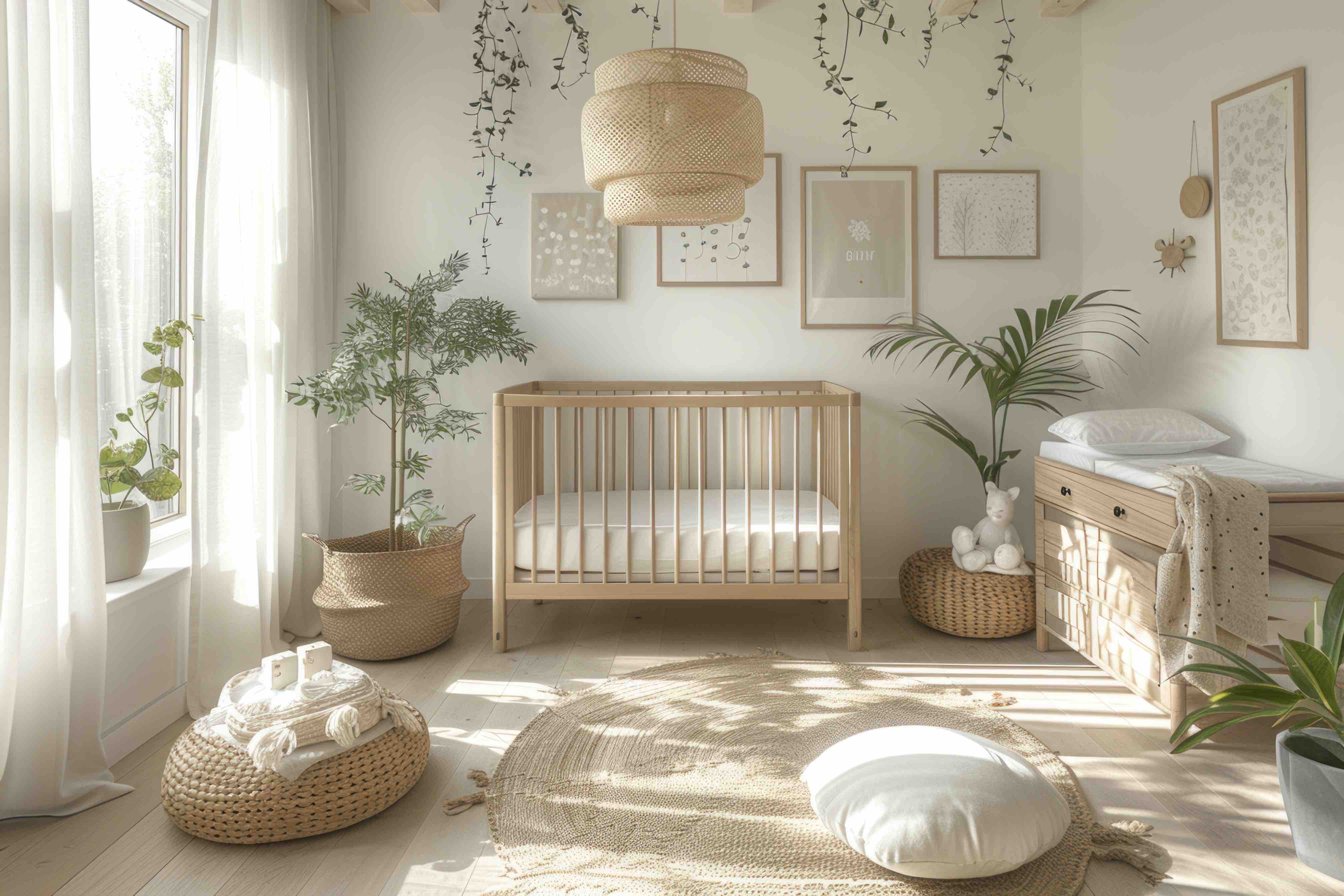
The nursery is ready before the baby arrives. Mobile hanging over the crib, stuffed animals lined up on the dresser, cloud garland on the wall, the Pinterest mood board 95% ticked off. Three months later, the baby has never slept a single night in that room, and half the objects still haven't been used.
The problem isn't the preparation itself. It's that the most visible sources of inspiration (Pinterest, Instagram, retailer catalogs) optimize for the photo, not for daily use. The result: you build a nursery ready to be posted, not a nursery ready to work. The two look almost nothing alike.
What a baby actually uses in the nursery during the first six months
One detail most articles skip: the American Academy of Pediatrics recommends that babies sleep in the parents' room for at least the first six months (ideally up to twelve), in their own bassinet or crib, to reduce the risk of SIDS. Which means that during the first half-year, the nursery is mostly used for diaper changes, clothing storage, and the occasional daytime nap when parents need quiet elsewhere.
A newborn nursery isn't a living space. It's a logistics room. That single shift in framing prevents about half of the regretted purchases.
The equipment that earns its place every day
A crib and a new firm mattress. The only piece of furniture that works nonstop for eighteen to thirty-six months. A standard or convertible crib both fine, depending on whether you plan to keep using it through age three. The mattress, though, must be new, firm, sized exactly to the crib (no gap on the sides), and compliant with current safety standards. Budget $150 to $400 for the crib, $80 to $200 for a good mattress. This is the one category where you don't economize.
Two or three sleep sacks sized for the season. The sleep sack replaces blankets, which are unsafe in the crib until 18 months due to suffocation risk. Check the TOG rating: 0.5 for summer, 2 to 2.5 for winter, 3 for very cold rooms. Two per season is enough, to rotate during laundry.
A dresser with a changing pad on top. Skip the dedicated changing table. A regular dresser plus a changing pad does the same job and converts into a kids' dresser around age two. Pick one with wide drawers: onesies, pajamas, spare diapers, and diaper cream all need to be within one-handed reach while the other hand holds the baby.
Blackout curtains or a blackout roller shade. Not glamorous, absolutely essential. A baby sleeping in a room that's 80% dark naps thirty to sixty minutes longer. A $40-$80 investment that pays for itself in returned sleep, especially between April and September when the sun rises before 6 a.m.
A warm, dim nightlight. Indispensable for night feeds, 3 a.m. diaper changes, and quick check-ins without flooding the room with ceiling light. Pick something simple, single-color, warm amber, and dimmable. Skip the star projectors sold as "calming": their blue light and constant motion wake light-sleeping babies more often than they soothe them, and they usually get unplugged by week three.
An audio baby monitor. Not the $250 model with HD video, smartphone alerts, and breathing sensors. A $30 to $50 audio monitor does the job. Breathing sensor monitors, in particular, tend to increase parental anxiety without clinical evidence of reducing SIDS risk. Most pediatric associations explicitly do not recommend them.
What Pinterest loves and you won't actually use
Crib bumpers. Cute on camera, unsafe in the crib. The CPSC banned the sale of padded crib bumpers in the United States in 2022 after linking them to dozens of infant deaths. "Breathable" or "mesh" versions still interfere with air circulation and create entrapment risk. A safe crib has a firm mattress, a fitted sheet, a sleep sack, nothing else.
The canopy over the crib. Zero function, collects dust, and blocks your line of sight to the baby when you walk in at 2 a.m. to check they're breathing. Its only real use is the newborn photo shoot.
The musical mobile. A newborn focuses at roughly 10 inches, not three feet above their head. Between months two and four they start to notice it, and by month six they try to grab it, which makes it a hazard and forces you to remove it. Useful lifespan: around six weeks. If you really want one, go with a simple wooden model over the big electronic box that loops the same lullaby into oblivion.
Decorative stuffed animals in the crib. Nothing in the crib before 18 months, not even the small "keepsake" bear given at the baby shower. Put them on the shelf. That's where they belong.
Positioning pillows and anti-roll wedges. Marketed as anti-flat-head or anti-reflux devices, they're explicitly not recommended by pediatricians for babies under six months: suffocation and entrapment risk. Back sleeping, flat firm mattress, nothing around the baby. That's the only rule.
The dedicated nursing glider or rocker. One of the most oversold items in the whole baby aisle. It costs $200 to $600, eats a full square meter of floor space, and half of nursing parents end up feeding in bed or on the couch because it's more comfortable. If you already have a decent armchair anywhere in the house, use that.
The wipe warmer, the bottle warmer, the bottle sterilizer, and the proprietary diaper pail. Already covered in our baby registry essentials article. These are the four classic "must-have" purchases that get shelved by month two.
Want to create your own list?
Paste a product link from any store, we grab the details. Share your list with loved ones in one click.
Create my listThe things Pinterest skips that you'll use daily
A cheap room thermometer and hygrometer. Ten dollars. Ideal temperature is 68-72°F, ideal humidity 40-60%. In winter with forced-air heating, humidity can drop to 25%, which dries out the baby's airways and multiplies minor colds. No Pinterest board has ever featured one.
A covered laundry hamper next to the changing station. A three-month-old produces on average three soiled outfits a day. Sharing the household hamper gets old fast. A dedicated one in the nursery saves dozens of trips.
Outlet covers and corner bumpers. Not immediately useful, but by eight or nine months when the baby starts crawling, it's late to start thinking about it. A full set costs $5 to $15.
A regular covered trash can with standard bags. Not the $50 diaper pail with proprietary refill cartridges. A standard step-on trash can, bag changed every two days, does the exact same job for $15.
A soft play mat for floor time. From two or three months, babies spend time on their back and then tummy-down on the floor to develop motor skills. A washable rug large enough to roll around on, or a proper padded play mat, beats cold hardwood or dusty carpet.
What you buy later, not before the birth
Toys in bulk, the bookshelf, the little table and chair, elaborate wall decor: all useful from 12 or 18 months, not before. A newborn plays with the ceiling and your hair. A four- to six-month-old grabs whatever you hold in front of them, but a simple play gym above the mat keeps them busy for months.
Buying the entire childhood universe before the birth is paying for storage. You'll know better at three or six months, and the secondhand market lets you react within days when a real need shows up.
The minimum budget for a nursery that actually works
Convertible crib plus new mattress: $250 to $600. Two sleep sacks: $50 to $120. Dresser with changing pad: $150 to $500 (or an Ikea dresser plus a changing pad: $100-$150). Nightlight plus audio monitor: $40 to $100. Blackout curtains: $40 to $100. Useful small accessories (hygrometer, hamper, outlet covers): $30 to $80.
Realistic total: $600 to $1,500 for a functional, safe nursery that gets daily use. Compared to the $2,000 to $3,500 of "complete nursery" bundles sold by retailers, the difference corresponds almost exactly to what ends up in a storage box by month three. For a full view of first-year costs, our first-year budget breakdown puts the nursery in perspective against the real cost drivers.
How to let family and friends contribute without drowning you
The crib, the dresser, the sleep sacks, the nightlight, the curtains: anywhere from $30 to $600 each. No single guest will spontaneously offer a $400 crib, but two grandparents can easily split one. Aunts and friends cover the sleep sacks, fitted sheets, and nightlight. Coworkers handle the small practical accessories.
A baby registry that explicitly lists nursery items, with clear prices and a group-gift option, absorbs most of the starter budget. LoveList lets you build that in five minutes: add the products you've picked from any store, share the link, and guests see in real time what's still available. No duplicates, no fourteenth stuffed giraffe, no wipe warmer gifted by the coworker in accounting.
If you only have five minutes
Crib, new mattress, two sleep sacks, a dresser with a changing pad, a warm nightlight, an audio monitor, blackout curtains. Seven items. Everything else is optional, and many things you think you're missing get bought later, once you actually know what you need.
The perfect Pinterest nursery is one that gets furnished after the baby arrives, not before. Leave room: you're going to need it for the things nobody can predict.